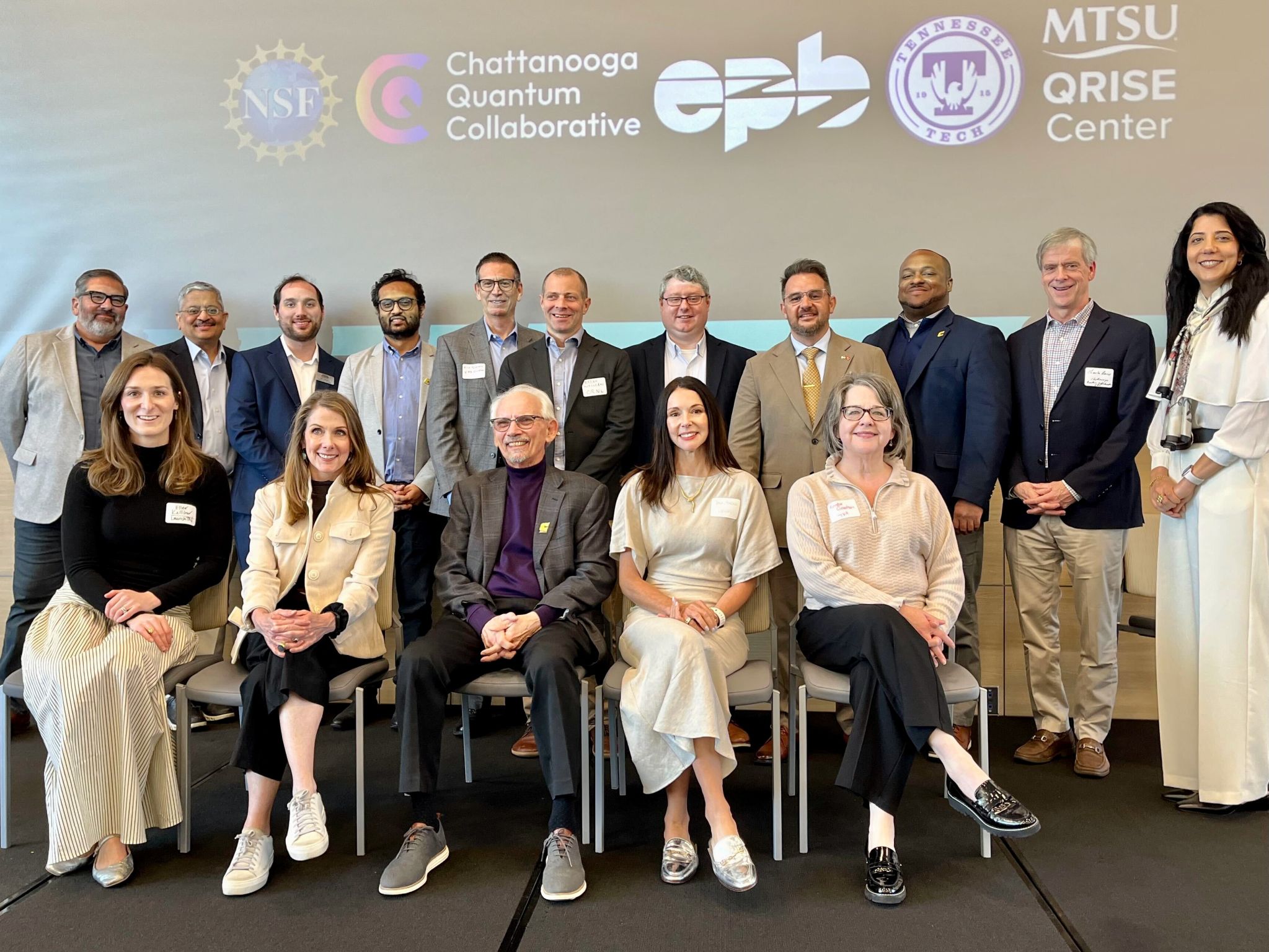
How does quantum research become real-world economic impact? That was the central question when researchers, industry leaders, and students from across Tennessee gathered on Thursday, March 12, for the first Quantum in Action event, organized by the Company Lab (CO.LAB), and Middle Tennessee State University’s QRISE Center was at the table with answers.
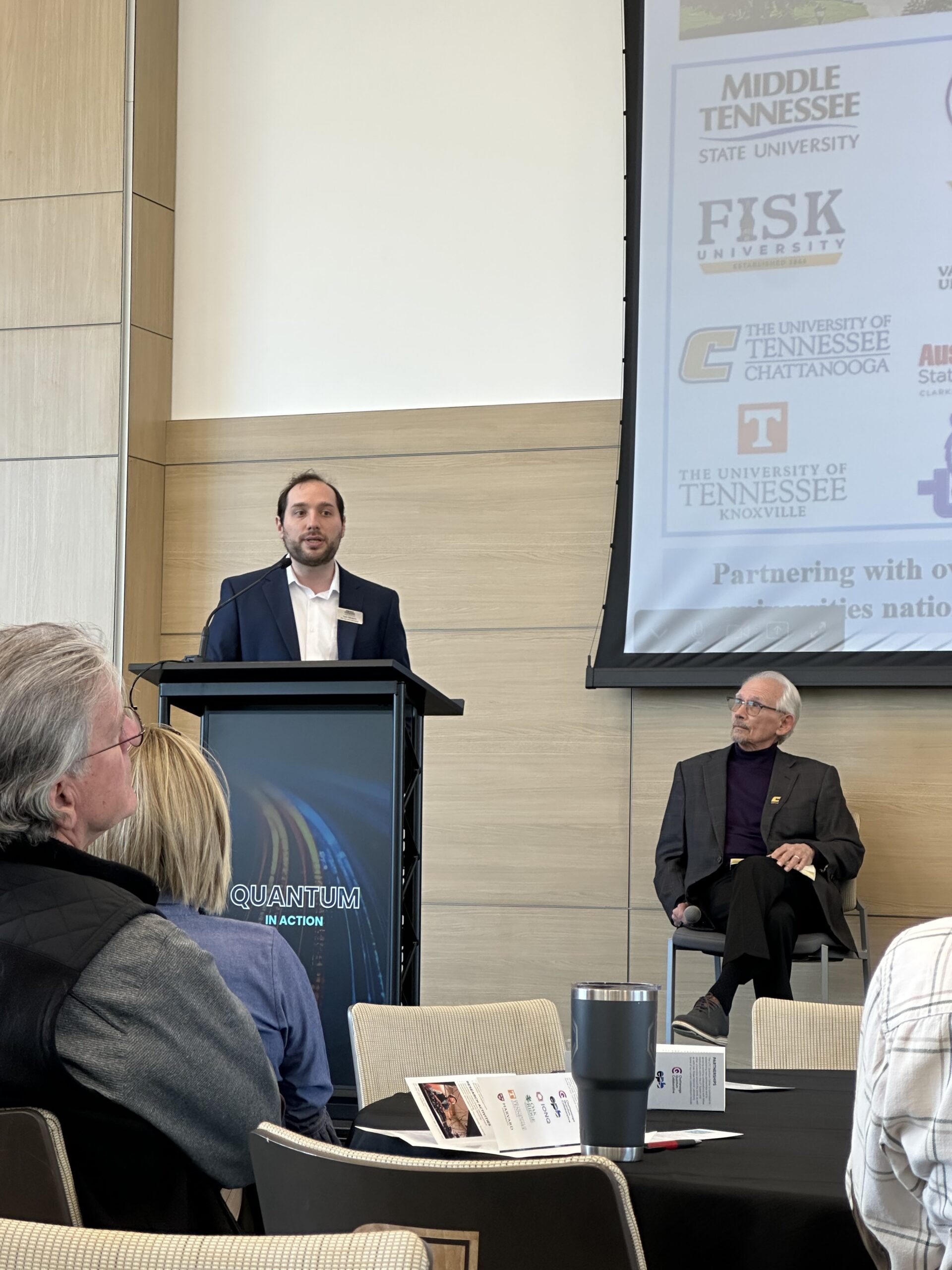
CO.LAB, with the Max Fuller Center for Innovation and Entrepreneurship at the University of Tennessee at Chattanooga’s (UTC), hosted the Quantum in Action event on the UTC campus to promote collaboration between researchers in quantum science, industry representatives, and community members. The event was sponsored by CO.LAB, IonQ, and the Tennessee Technology Advancement Consortium, with major representation from the Chattanooga Quantum Collaborative and EPB.
MTSU’s QRISE Center contributed to a panel discussion, and two students from the Department of Physics and Astronomy attended the event. Jack Villanova, an assistant professor of physics and associate director of the QRISE Center (Quantum Research, Interdisciplinary Science and Education), represented MTSU at the event. Villanova said the discussions underscored how quickly quantum is moving from the laboratory toward real-world applications, and how ready MTSU is to be part of that shift.
“One thing that came through clearly is that quantum networking and sensing is where industry sees near-term impact in Tennessee, and that’s an area where MTSU is actively building capacity,” Villanova said. “We have faculty across physics, engineering, and computer science who are engaging with quantum in their research, which gives us real interdisciplinary strength. And the partnership we’re developing with Middle Tennessee Electric is a concrete example of how quantum technology connects to regional infrastructure—the same model that Chattanooga built with EPB is something we can grow right here in Middle Tennessee.” The second session, “From Lab to Market,” was chaired by Tasia Malakasis (CO.LAB) and discussed how companies intend to implement quantum technology. Members of the panel included Walter Hough (Davidson Technologies), Andrea Delgado (QBlox), Kristie Goodson (TVA), and Danna Bailey (CQC).
The third session focused on how to train quantum-ready talent and bring them into companies. Panelists were from UTC, EPB, and IonQ. The final session of the day asked and answered how governments could help to de-risk commercialization of quantum technologies, with panelists from LaunchTN, EPB, and CO.LAB.
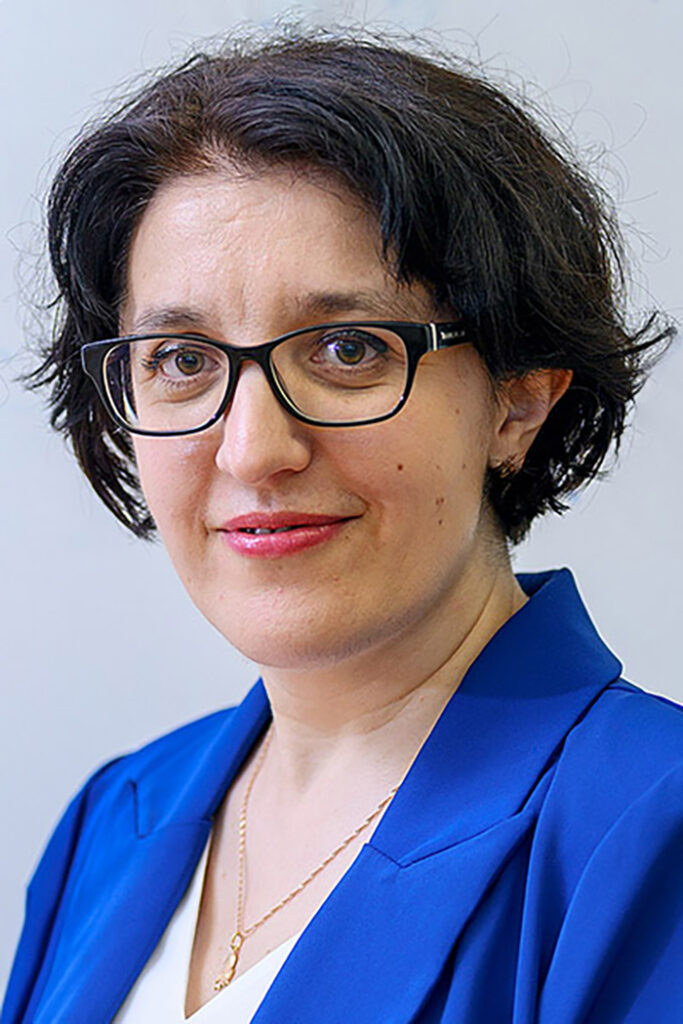
“Tennessee’s quantum future is a statewide effort, and MTSU is proud to be the institution anchoring that effort in the Middle Tennessee region,” said Hanna Terletska,Director of the QRISE Center and Associate Professor of Physics at MTSU. “With eight federal awards from NSF and DOE, the state’s first undergraduate QISE program, partnerships connecting Nashville’s HBCUs to Oak Ridge National Laboratory, and K-12 program that reaches teachers and students across the region, we are building the quantum workforce pipeline that Tennessee needs interdisciplinary, and built for the long term.”
MTSU physics students Ariel Nicastro and Jacob Juca attended the event and valued the chance to hear perspectives from across industry and academia.
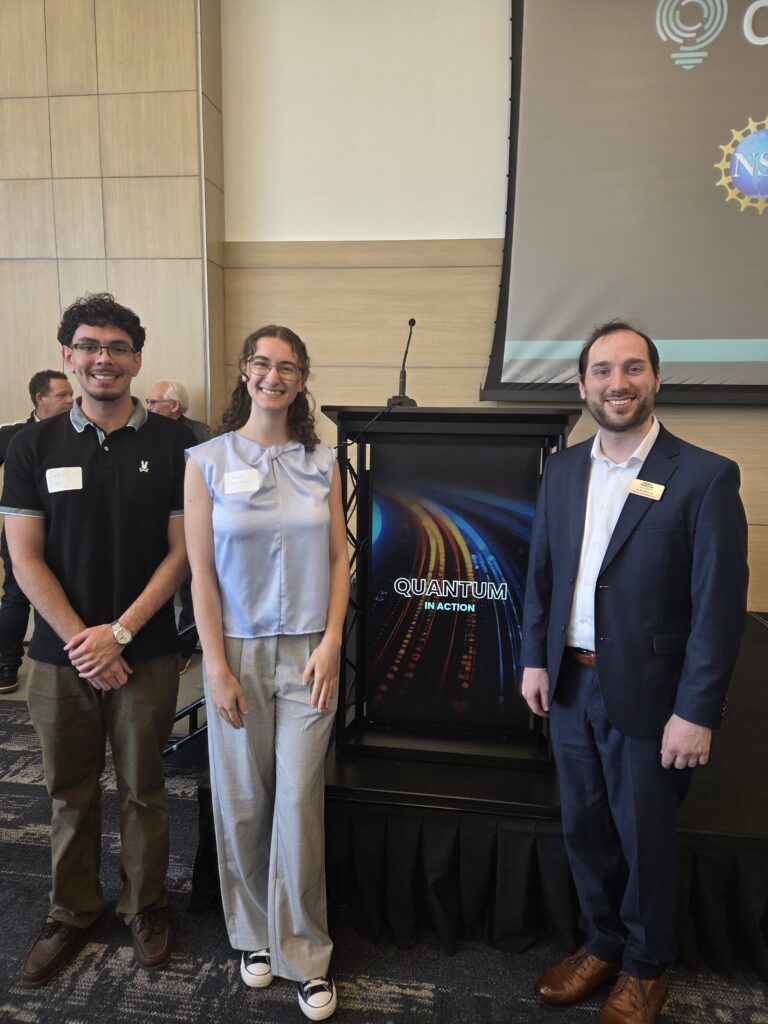
“The most beneficial panels to me were the first panel about quantum efforts at universities across Tennessee, and the third panel about recruiting and retaining talent, and what skills are desirable in quantum company employees,” Nicastro said. Juca agreed. “I spoke to two of the representatives and got firsthand advice about preparing for internships,” he said, adding, “This helped me to get rid of some of the anxiety about the job market that surrounds quantum computing.”
The Quantum in Action event was the first installment of the CO.LAB Quantum Activation Series, backed by a Launch Tennessee grant. The series connects quantum researchers, entrepreneurs, and industry partners across the state. The second event in the series is scheduled for April 10 at MTSU in Murfreesboro, bringing the statewide conversation to the Middle Tennessee corridor.
MTSU’s QRISE Center, which launched in October 2025, has secured more than $8.5 million in active and recent federal funding and established the state’s first undergraduate quantum information science curriculum, beginning with an Introduction to Quantum Computing course in Spring 2023 and expanding to include digital badges, a professional certificate, a quantum science concentration and minor, and a graduate pathway through an NSF-funded program in Quantum Information Science and AI. The center also leads the $2.2 million DOE RENEW-funded TN-QuMat Consortium with Oak Ridge National Laboratory, Tennessee State University, Fisk University, and Meharry Medical College, and runs statewide K–12 outreach including Quantum Quest summer camps and nationally recognized Train-the-Trainer workshops for high school and university educators.
For more information about the QRISE Center, visit quantum.mtsu.edu. For information about the upcoming April 10 Quantum Activation Series event at MTSU, visit https://berc.mtsu.edu/2026-tech-vision/.
By Hanna Terletska, Jack Villanova